
Additional retailers to follow
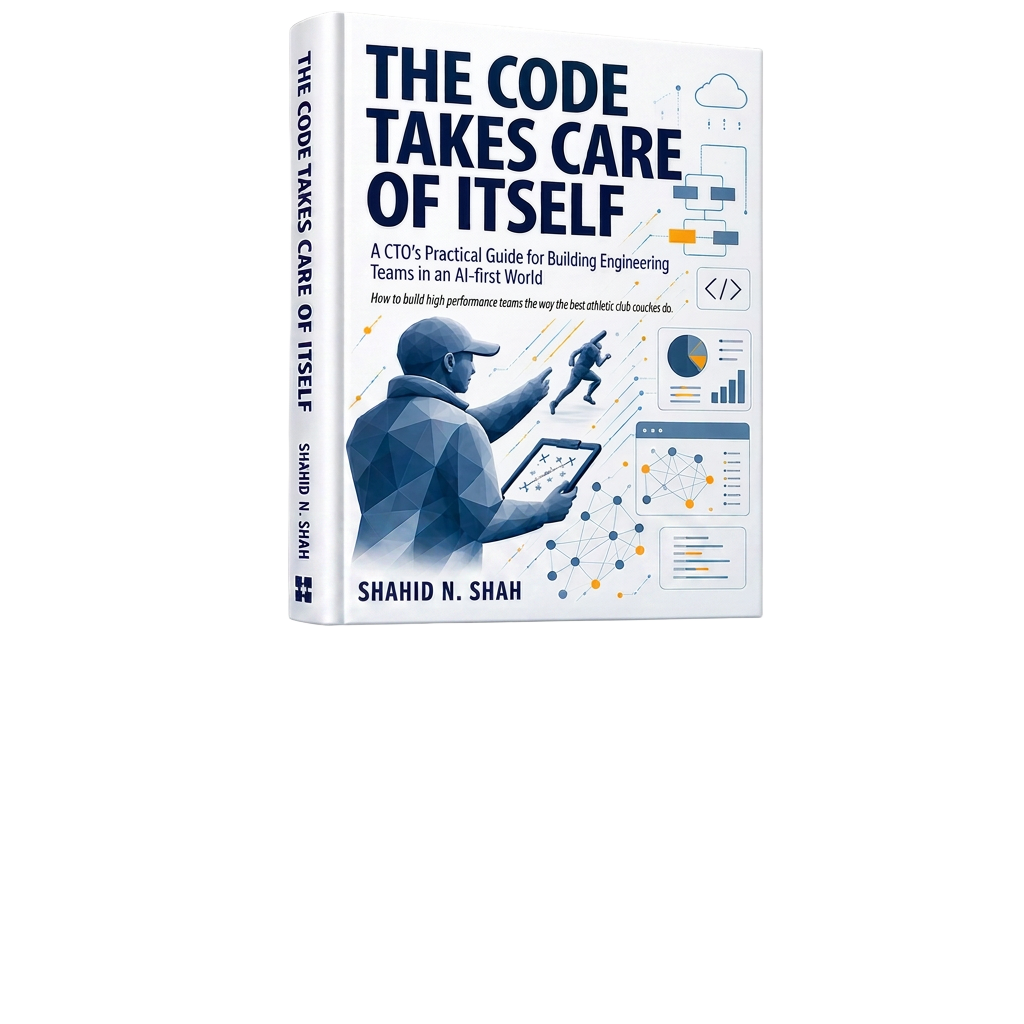
The Code Takes Care of Itself
A CTO’s Practical Guide for Building Engineering Teams in an AI-first World
How to build high performance teams the way the best athletic club coaches do.
The CTO’s job was never to be the best engineer in the building. It was to make sure the building did not need one.
The premise
Execution got cheap. Judgment did not. A contrarian, practical leadership book for the technologist who was promoted because they were the best engineer in the room, and is now discovering that the same instinct can make them the organization’s most expensive bottleneck.
AI put more talent on the field. The CTO’s job is to turn it into a team. When code becomes abundant, judgment, trust, coordination, and completion become the whole job.
For most of the software era, technical execution was scarce. AI is compressing that advantage: the same models, tools, and infrastructure are available to nearly everyone, and more ideas can become plausible code, prototypes, and analyses than any organization can responsibly validate and ship. That does not make technology leadership easier; it moves the bottleneck to choosing what deserves to exist, defining acceptable tradeoffs, evaluating output that looks convincing, integrating it into a real system, and taking accountability for the consequences.
The book names the replacement role: coach. Not a life coach, cheerleader, or consultant. A real coach watches performance, defines a standard, selects and develops a roster, writes and revises the plays, studies the film, and makes the system stronger than any one participant. It uses the coordination system of American football (and the coaching philosophy associated with Bill Walsh) as a sustained lens, and acknowledges that lineage while making an original argument for technology executives. How Great CTOs Coach Teams, Set Standards, and Build Organizations That Run Without Them is the argument in one line.
Where most metaphor-driven leadership books stop, this one installs machinery underneath the idea: every chapter delivers a diagnostic, a decision rule, or a working playbook. The title is a promise and a provocation; it sounds wrong until the book explains the two meanings of code: the instructions machines execute, and the principles a team lives by. Software never takes care of itself by accident. It begins to look self-sustaining only after the CTO has built judgment, standards, and decision rules that operate when the leader is absent.
Seven signature frameworks
- 01
The Master Orchestrator
The CTO creates direction, developed judgment, and a compounding standard rather than trying to remain the best player at every position.
- 02
AI Time versus Legacy Time
Markets and tools now change on a faster clock than most governance systems. CTOs must shorten checkpoints without shortening thought.
- 03
Decision Debt
Load-bearing decisions postponed without an owner or trigger compound like technical debt, and AI raises the interest rate.
- 04
Staged Autonomy
Trust is assigned by person and task, based on evidence. AI agents may occupy a stage of autonomy but can never inherit accountability.
- 05
The Evidence Ladder
Executive claims mature from anecdote to pattern, telemetry, root cause, and playbook. Asking what rung this is on makes trust inspectable.
- 06
The Tradeoff Ledger
Mature teams name what is gained, what is surrendered, who pays, and what evidence would reverse the decision.
- 07
Completion Engineering
When generation becomes abundant, finishing becomes scarce. Organizations must deliberately grow evaluation, integration, validation, governance, and shipping capacity.
Who it's for
Primary readers
- New CTOs who need a first-90-days operating model rather than a catalog of technologies
- Fractional and interim CTOs establishing standards and trust without positional permanence
- VPs and Heads of Engineering moving to company-wide technology accountability
- Founder-CTOs deciding when the player-coach model has become a bottleneck
Also for
- CEOs, founders, and board members who need a concrete way to evaluate and support a CTO
- Product, security, data, and operations leaders who depend on technology but don’t report to it
- Engineering directors and staff-plus engineers weighing the executive path
- Executive coaches, leadership programs, and PE/VC operating teams developing technology leaders
Contents
Part IEstablishing the Standard of Performance
- 01The CTO as Athletic Club Coach
- 02Knowing the Game Before You Call the Plays
- 03How to Find Out What Business You’re In
- 04Creating Standards and Sustaining Performance
Part IIDefining Your Playbook
- 05The Lineage: Skunk Works, the Algorithm, and Why Playbooks Win
- 06Developing and Implementing the Playbook
- 07Creating an Adaptable Playbook
Part IIILeadership in Technology Teams
- 08Building Your Team: Drafting and Developing Talent
- 09Putting Your Players in Position to Succeed
- 10Leading through Adversity: Narration Is the Job
Part IVExecution and Performance
- 11The Role of Discipline: Enforcing Standards without Micromanaging
- 12Communicating the Strategy, in Both Directions
- 13The Instrument Panel: Teaching the C-Suite to Judge Engineering Health
- 14Managing Up, Down, and Sideways
Part VScaling Excellence
- 15Building for Growth: Scaling Technology and Teams
- 16Aligning Architecture and Infrastructure with Medium-Term Business Needs
- 17Leading with Flexibility: The Power of Late-Binding Decisions
- 18There Are No Solutions, Only Tradeoffs
Part VILong-Term Impact
- 19Completion Engineering: What AI Makes Cheap, and What It Makes Scarce
- 20Building Leaders Who Don’t Wait for You
- 21Leaving a Legacy of Customer-Centric Leadership
Part VIIThe Economics of the Playbook
- 22Capabilities, Not Tickets: Prioritizing by Economics
- 23Sweating the Details: Why Judgment Requires Direct Contact
ConclusionThe conclusion resolves the title’s tension by returning to the two meanings of code: machine instructions, and the principles a team lives by. The durable work is defining excellence, communicating it precisely, and building an organization whose performance does not depend on the leader’s presence.
Specifications
- Category
- Business / leadership / technology
- Format
- Narrative leadership playbook
- Structure
- Seven parts, 23 chapters, tools throughout
- Length
- Approx. 126,000 words
- Status
- Complete manuscript, revision-ready
Reading the book and hiring the author are two separate paths. For fractional CTVO, CTO, CISO, or EiR engagements, see consulting.